The role of the Slovenian National Assembly in EU affairs

by Sabina Lange (translated by Grega Jug)

On Friday December 12th 2014 the European Commissioner Violeta Bulc attended a joint meeting of four committees of the Slovenian National Assembly, where she was received also by the Assembly’s president Milan Brglez. Bulc’s visit is in line with the announcement of the president of the European Commission Jean-Claude Juncker, who said that his Commission will be more “political” and that will maintain closer contacts with the member states, specially through visits in national parliaments.

Commissioner Bulc presented to Slovenian MPs the investment plan of the EC, while adding that commissioners don’t have the power to choose projects. Does the National Assembly have it? Which is the role of national parliaments in the EU? Do they act directly towards the EU or they act through the national governments? What can we expect from more frequent visits of the Slovenian and other commissioners in the National Assembly? This post will answer to these questions.
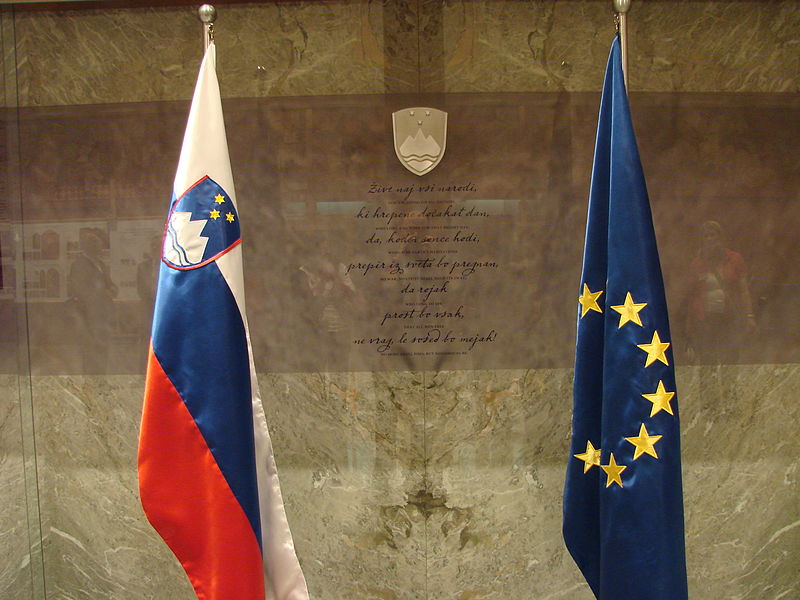
(Vir: MZaplotnik/Wikimedia Commons)
(Source: MZaplotnik/Wikimedia Commons)

Preberi več “The role of the Slovenian National Assembly in EU affairs”

EU-Russia Relations: The winter is coming

Vir: neftegaz.ru
Vir: neftegaz.ru

On the Eastern border of the European Union extends the world’s largest country, Russia. This ex-Eastern superpower is now in the hands of Vladimir Putin, a kind of an “elected” despot, who has been lately increasingly turning his back at the European Union.  With the cancellation of the South Stream project, which would have brought more Russian gas into the EU, a colder period of EU-Russia relations is at the horizon. This week, read more on EU-Russia relations, which issues cannot be agreed upon and why Europeans are not too worried about the cancellation of the South Stream.

Preberi več “EU-Russia Relations: The winter is coming”

(Un)openess of the decisional process on EU level

“The problem is not in the lack of confidence into the EU institutions, but in the decision process, which is not part of the public sphere because of its secrecy”. This tweet is a reaction (for which I am very thankful) to my interview on the e-participation of citizens, that was published on the website of the Institute for electronic participation (InEPA). As 140 characters are not enough to answer to it, I decided to write my answer here. Briefly I can say just the following – the lack of confidence into the EU institutions (and the consequent feeling of impotence) is a consequence of the lack of knowledge of their work and of the decision process. Which is in fact not even so closed as it seems.

Preberi več “(Un)openess of the decisional process on EU level”

Free movement of persons – fundamental right or privilege?

The free movement of persons (or workers) is at least as old as the process of European integration and represents one of the four fundamental rights on which the EU is based. The range of rights expanded through the years, specially via the EU Court rulings, and today we are allowed to move, live and work in any EU country. When we are asking ourselves what the EU has done to/for us, we can without any doubt say that the free movement of its citizens is one of the most important achievements of the EU. In fact it is so important, that we consider it as granted. Unfortunately, actions from some countries (particularly those of the UK who wants to limit the free movement of EU citizens) show that even if something is considered as granted, we have to keep working to maintain it.

free-movement
(Source: European Union 2014)

Preberi več “Free movement of persons – fundamental right or privilege?”

Europe’s position on GMOs and what’s in store

Vir: modernfarmer.com

The European Parliament Committee on Environment, Public Health and Food Safety will vote today on the new rules regarding genetically modified organisms (GMOs). Read more on what the new legislation has to offer, how long can a legislative procedure last if it drags into a second reading and when can a final decision be expected.

There are only two GMOs currently  allowed for cultivation in the European Union and only one of them is actually grown. The MON 810 maize, to which the genetic modification provides protection against parasites, has been confirmed for cultivation as early as 1998. Currently, it is grown in five Member States (Spain, Czech Republic, Romania and Slovakia) and represents 1.56% of all maize grown in the EU and 0 26% of all GM maize in the world. In 2010 cultivation and processing was also approved for a genetically modified potato called “Amflora”, but since 2011, it is no longer cultivated.

Preberi več “Europe’s position on GMOs and what’s in store”

ECB stress tests: More stress for banks or citizens?

arton18162
Source: forexinfo.com

Results of the European Central Bank’s (ECB) stress tests for European banks were published last Sunday. Twenty-four banks out ob 123 failed the tests, including two biggest Slovenian banks, Nova Ljubljanska banka (NLB) and Nova kreditna banka maribor (NKBM). Twelve out of these 24 banks have already raised enough capital to secure their businesses in case of severe stress and the tests are this time seen as quite positive.

But what do these stress tests really show and what do they mean for the population of a country that the banks are from? 

Preberi več “ECB stress tests: More stress for banks or citizens?”

New Commission – all’s well that ends well?

151 days after the EP elections, the European Union should today get the 12th Commission led by Jean-Claude Juncker. After all the problems, insinuations and controversies Slovenia too got its commissioner. This post will be held by Violeta Bulc, who successfully underwent Monday’s hearing. The naming process was very difficult and, unfortunately, Slovenia emerged very ridiculed. Some other candidates were also controversial (Jonathan Hill, Tibor Navracsics, Miguel Arias Cañete), however not so much as the Slovenian candidate. In any case, it’s no use crying over split milk. What can we therefore change until 2019, when the next Commission would be named, to minimize any future problems?

The team is completed (Source: Greens/EFA)

Preberi več “New Commission – all’s well that ends well?”

Erasmus: The guy that made student exchange possible for 3 million young Europeans

Vir: Evropska komisija
Vir: Evropska komisija/Source: European Commission

The program of the European Union, named after the Dutch humanist Erasmus of Rotterdam, is one of the most successful instruments of the Union. Since its creation in 1987 it has enabled 3 million students to study or work abroad for a period of up to one year. By 2020, Erasmus+ plans to increase this number further by an additional million.

In today’s analysis, find out:
* Why Erasmus is not only an exchange, but an experience,
* Why its easier to find work for Erasmus students,
* How to apply for an exchange and how to get financing,
* And who the H** was Erasmus.

Preberi več “Erasmus: The guy that made student exchange possible for 3 million young Europeans”

Climate change: What Europe has to offer

ban
The UN General Secretary seems to agree with Europe – Each action counts. Source. UN

The Climate summit took place yesterday at the occasion of the General Assembly of the United Nations (UN) yesterday. Ban Ki-Moon, General Secretary of the UN, called for this summit with the aim of putting the issue of climate change back on the top of agendas of over 120 world leaders, even though a regular UN climate conference is foreseen for this December. The European Union is represented in New York by the outgoing President of the European Commission, José Manuel Barroso, Commissioner for climate change Connie Hedegaard and Commissioner for development aid Andris Piebalgs. Can Europe use its exaple to stimulate other countries towards a more serious climate action? Which policies does it have at its disposal? Well, Ban Ki-Moon preferred to bet his money on Leonardo Di Caprio.

Preberi več “Climate change: What Europe has to offer”

Scottish D day – #YesScotland or #BetterTogether

Tomorrow, more than 4 millions of Scots will decide about Scottish independence on a referendum. The latest opinion polls are suggesting a very narrow result. In the latest poll made by Panelbase on September 12th the difference between the supporters and the opponents is just 1 percent – 47 % against, 46 % in favour, while 7 % of people is still undecided. A “yes” tomorrow will, however, represent just the beginning of the Scottish independence journey. As in every separation, the parties will need to convene on several issues. A separation from the UK will affect also Scotland’s relations with the EU. Would Scotland automatically become the 29th member state of the Union or will it need to enter in the queue as every other candidate State? As we are talking about the EU, there is no common opinion on this issue.

Yes or no? (Source: BBC News)

Preberi več “Scottish D day – #YesScotland or #BetterTogether”