When France and Germany have to back up Europe

It was 26 years ago that heads of French and German state stood side by side in Strasbourg. Shortly after the fall of the Berlin Wall, François Mitterrand and Helmut Kohl delivered the short speeches of optimism. This week, the German Chancellor Angela Merkel and her French counterpart President François Hollande stood side by side again in front of the Members of the European Parliament (MEPs). In spite of them coming from different spectra of political field, the leaders of these two countries that are considered a “locomotive” of European integration, felt compelled to call on all Europeans to cooperate more. An observer might ask here whether European integrations are really in such serious trouble that they need the push from the side of the funding members. Is the vision of the President of the European Commission, Jean-Claude Juncker, simply not enough to move things into the European direction at the time when each Member State is pulling the strings in its own way? And finally, was the call of Chancellor Merkel and President Hollande in favour of European solidarity overshadowed by their statements in immigration and refugee crisis that the media so happily took up?
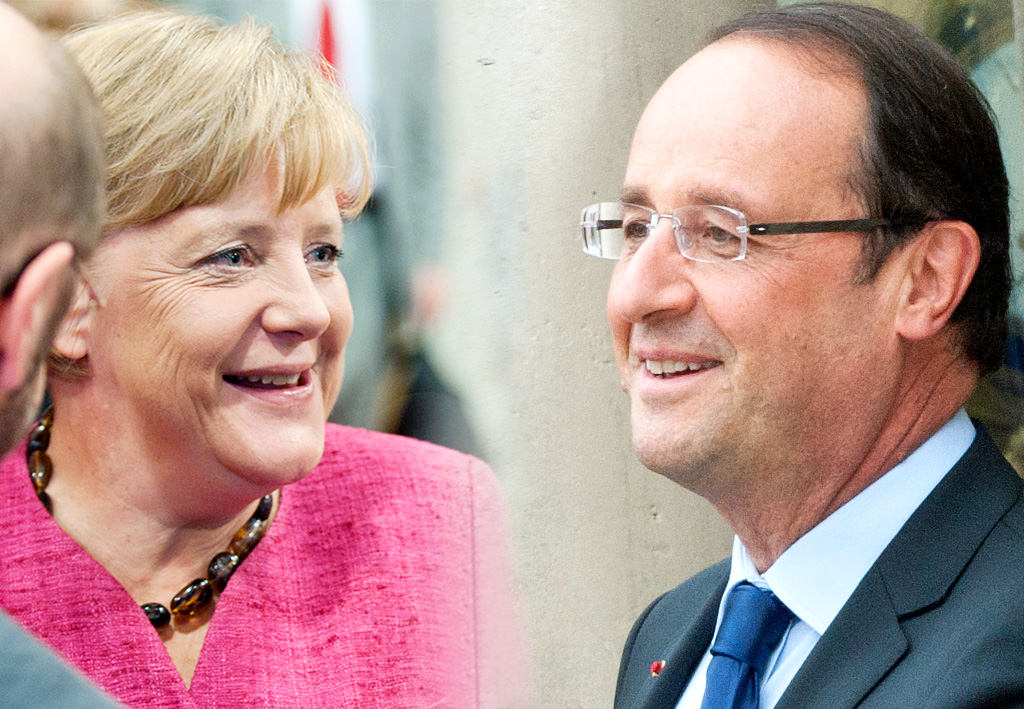
Vir: European Parliament Press Service

Vir: European Parliament Press Service

Preberi več “When France and Germany have to back up Europe”
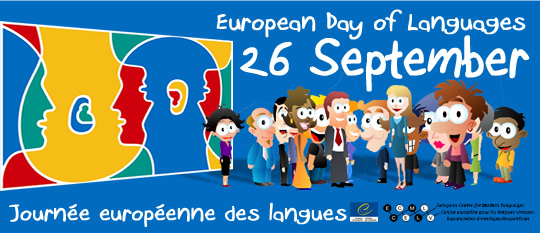
Europe of languages or what happens when interpreters switch off their mikes

Even though the hot topic of these days, especially in Slovenia where we are not used to those that look different form our common Slovenian, is the refugee crisis (which Grega described last week), I decided to serve you a bit of a lighter topic this week from the side of EU360. A topic coloured with languages as tomorrow is the European day of languages which marks our multilingualism and linguistic richness. While it is general knowledge that the EU has 24 official languages and a number of working languages, I am going to give you a peek into what happens in Brussels, when interpreters switch off their mikes.

EDL-banner-COE2012-EN
Source: http://clilingetxo.blogspot.si/

Preberi več “Europe of languages or what happens when interpreters switch off their mikes”

It’s the End of Schengen (As We Know It)

I owe you an apology. It was difficult to find the inspiration and will to write something for the blog this week. Firstly, I was thinking to write something lighter. The European Mobility Week was a perfect excuse. However, the events of the past days, also in Slovenia, didn’t allow me so. I can’t be silent over what is happening. If after the Paris terrorist attacks in January I was thinking how will Schengen seem  in the future, after the last events I am more and more convinced that Schengen, as we know it now, won’t exist any more.

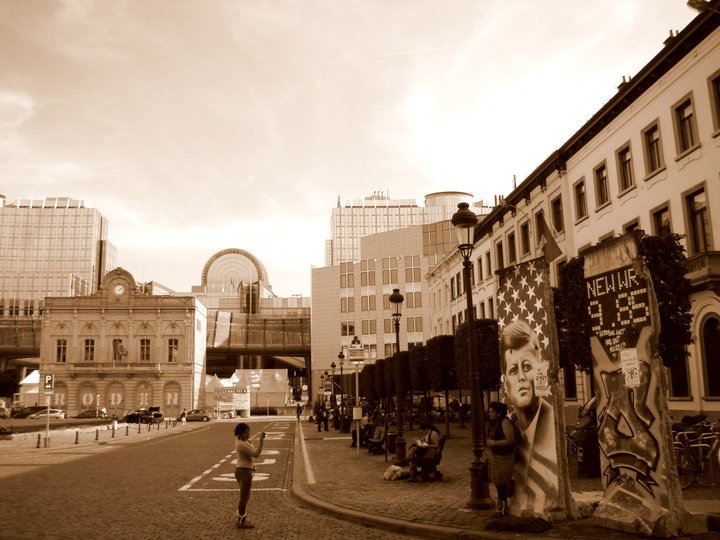
Ostanek berlinskega zidu pred Evropskim parlamentom v Bruslju (Vir: (c) Evropska unija 2014 - Evropski parlament)
A historic residue or a return to the future (Source: (c) European Union 2014 – European Parliament)

Preberi več “It’s the End of Schengen (As We Know It)”

Apparently it’s not (yet) enough

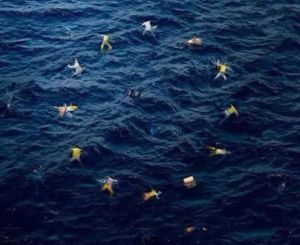
After last April’s boat sinking between Malta and Lampedusa, where at least 950 people died, I was asking in a post if that event would wake up the European public and politics to act. I left some hope back then, that the “fast reaction of the EU” will bring some concrete actions. But I was wrong. As always the highly ambitious plans were followed by a cold shower, as the EU States didn’t respect the decisions taken by them just a couple of days before. unfortunately, the number of tragedies didn’t drop. Rather the contrary.

Vir: (c) Bansky FB
Source: (c) Bansky FB
Preberi več “Apparently it’s not (yet) enough”

European muscles. Literally.

Do you know who won the Olympics in London in terms of the medal count? If you think it was the United States then think again. In fact, the winner by medal count at the last Olympics in London (as well as earlier) was the European Union! Invincible athletes of the Member States of the European Union jointly achieved 305 medals (92 gold, 104 silver and 109 bronze), while their American counterparts collected a total of 104 medals (46 gold, 29 silver and 29 bronze) (more information here and here). Even when translated into number of medals per capita, Europe remains in the lead with one medal for each 1.7 million citizens, where the Americans won one medal for every 3 million citizens.

So, you know that the European Union is an Olympic superpower. Now read what makes Europeans so very successful in sports and in what ways we work together to create a healthier and more sporty continent.

340201_2
Sir Chris Hoy, British athlete, celebrated his victory in London with the EU flag. Source: express.co.uk

  Preberi več “European muscles. Literally.”

Will this time be (really) enough?

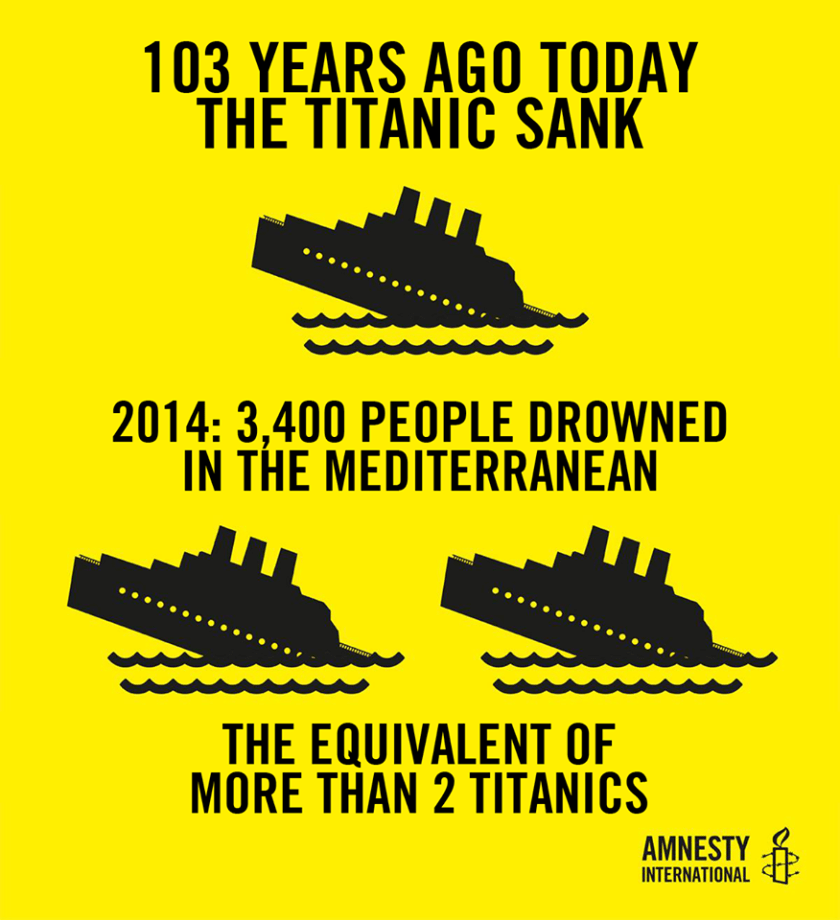
Europe is again under shock. During a journey to that promised Europe, that for many African who don’t have anything to lose and that most probably represents the promised land, a lot of people drowned. Around 950 people were on the boat that on Sunday sank between Malta and Lampedusa, and another 200 on the boat that sank on Monday near the Greek island of Rhodes. Some of them were rescued, but the vast majority will forever remain in the Mediterranean. Based on the data of the International Organisation for Migration (IOM) the Mediterranean took last year 3.279 people, while until the 19 April of this year already 1.600. For how much have this number to rise, that Europe (the EU and its Member States) will react?

Vir: (c) Amnesty International UK
Source: (c) Amnesty International UK

Preberi več “Will this time be (really) enough?”

European Citizens’ Initiative – success or disappointment?

April 1st marked the third anniversary of the beginning of the European Citizens’ Initiative (ECI). Even if its implementation was foreseen already in the Lisbon treaty (which entered into force in 2009), the enforcement of the ECI was postponed until 2012. The ECI was presented as an important instrument for EU citizens, that would allow them to influence and directly shape the EU legislation. What did the ECI really bring and can we be satisfied with it?

CCefuaEWIAAtStf.png-large
Source: (c) Twitter @EURLex

Preberi več “European Citizens’ Initiative – success or disappointment?”

A new Union. The Energy Union.

Recently, top EU leaders announced the establishment of the Energy Union. This should be the creation of an integrated energy policy for the entire European Union, which is currently lost somewhere between environmental policy, competition, industry and climate change. Before us is a period when a number of important decisions will be taken in the field of energy. The Informal Energy Council scheduled for next week will also see Ministers of the Member States discuss this new initiative. Therefore, I suggest to look at some key information and basic concepts to shed some light on the matter.

THUMB_I098040EN1W
Source: europa.eu

Preberi več “A new Union. The Energy Union.”

Brussels: A political centre, a city of many faces

It is usually thought of the European Union capital city as a faceless conglomeration somewhere between France and the Netherlands, where heaven exists for bureaucrats that write incomprehensible legal and technical texts, and communicate with citizens in a similar style. Brussels is rarely considered for what it really is; probably a very unique place not only in Europe but in the world and very much comparable to Washington DC. Brussels is much more than just a beehive of officials. It is the center for political events in Europe and one of the most important places for lobbyists from different Member States. Brussels is certainly not impersonal or empty. Brussels are people, students, trainees, lobbyists, politicians, NGO workers and officials.

plux
Photo: ŠM

Preberi več “Brussels: A political centre, a city of many faces”

Quantitative Easing for dummies

by Isabel Mateo

Lately, we have been hearing a lot about quantitative easing (QE) in the media. However, as this is a rather specialized topic, most people, even some economic press readers, do not have a clear notion of what QE is. That is why my friend Grega invited me to write this post for his blog. He said he needed someone to explain QE for dummies. Thus, I did not have to worry about a title anymore!

Source: (c) economist.com

Preberi več “Quantitative Easing for dummies”