Disinformation in the EU: Why It Matters More Than Ever

From foreign interference to domestic political manipulation, disinformation campaigns are increasingly shaping public debate, influencing elections, and undermining trust in democratic institutions. Understanding the dynamics of this challenge is essential for safeguarding Europe’s democratic resilience.


In today’s hyperconnected world, information travels faster than at any point in human history. Unfortunately, so does disinformation. For the European Union — a political and economic community built on trust, cooperation, and democratic values — the spread of false or misleading information is not just an online nuisance. It is a strategic threat.

From foreign interference to domestic political manipulation, disinformation campaigns are increasingly shaping public debate, influencing elections, and undermining trust in democratic institutions. Understanding the dynamics of this challenge is essential for safeguarding Europe’s democratic resilience.


Why Disinformation Finds Fertile Ground in Europe

Disinformation is not new — propaganda has existed for centuries — but the digital environment has changed its scale and impact. Several factors make the EU particularly vulnerable:

1. A Diverse Information Ecosystem

The EU includes 27 countries, 24 official languages and a wide array of media landscapes. This diversity makes coordination difficult, and it allows harmful narratives to spread across borders before authorities or fact-checkers detect them.

2. High-stakes political debates

Issues like migration, climate policy, enlargement, sanctions, and digital regulation are fertile ground for manipulation. These topics often involve strong emotions, which makes users more prone to sharing unverified content.

3. Foreign Influence Operations

Both state and non-state actors view Europe as a key arena for geopolitical influence. Russia’s ongoing information campaigns, China’s strategic messaging, and the rise of fringe political networks amplify narratives designed to erode trust in EU institutions.


How Disinformation Works: Common Narratives

Across Europe, several recurring patterns appear:

  • Anti-EU sentiment: Claims that the EU “dictates” policies to member states or undermines national sovereignty.
  • Migration hysteria: False stories portraying migrants as criminals or economic threats.
  • Health misinformation: Highly visible during the COVID-19 pandemic, but still common in debates about vaccines, healthcare, or biotechnology.
  • Climate denialism: Narratives aimed at discrediting the Green Deal or climate science.
  • Election interference: Coordinated attempts to influence voting behaviour through misleading ads, fake social media accounts or manipulated news.

These narratives often mix real facts with distortions, making them more convincing and harder to counter.


What the EU Is Doing to Fight Disinformation

Over the past years, the EU has become one of the most active global actors in regulating digital spaces and building societal resilience.

1. The Digital Services Act (DSA)

The DSA introduces new responsibilities for large platforms, including requirements to:

  • remove illegal content,
  • label political advertising,
  • limit algorithmic amplification of harmful content,
  • provide access to data for researchers.

It is the most ambitious digital regulation ever introduced in Europe.

2. The European External Action Service (EEAS) and StratCom

EEAS monitors disinformation through its EUvsDisinfo platform, which tracks and debunks foreign interference campaigns, especially those originating in Russia.

3. The Code of Practice on Disinformation

Major tech companies — from Meta to Google — are part of a voluntary framework to reduce harmful content and improve transparency. Under the new DSA, key parts of the Code are becoming legally enforceable.

4. The Rapid Alert System (RAS)

Member states can share information about ongoing disinformation campaigns in real time. This helps respond more quickly and coordinate across borders.

5. European Digital Media Observatory (EDMO)

A network linking universities, think tanks, fact-checkers and civil society across Europe. It strengthens research capacity and supports local fact-checking initiatives.


What Europe Still Needs to Improve

Despite progress, several challenges remain:

  • Uneven media literacy across member states
    Some countries have strong media education programmes; others lag behind.
  • Lack of transparency around political funding
    Hidden financing, opaque advertising and coordinated inauthentic behaviour still influence online debates.
  • Difficulty accessing platform data
    Researchers and regulators still struggle to obtain meaningful data from social media companies.
  • Growing use of AI-generated content
    Deepfakes, spam bots and synthetic media are becoming more sophisticated, making detection harder.
  • Polarisation and declining trust
    Even high-quality information often fails to convince those already engaged in ideological echo chambers.

Building a More Resilient Europe

Addressing disinformation requires a combination of regulation, education, technology, and social responsibility.

For governments and institutions

  • Invest in media literacy and critical thinking.
  • Support independent journalism.
  • Ensure transparent funding of political communication.
  • Strengthen EU-wide coordination mechanisms.

For media and digital platforms

  • Improve content moderation.
  • Collaborate with fact-checkers and researchers.
  • Make algorithms more transparent to users.

For citizens

  • Think before sharing.
  • Cross-check sources.
  • Follow reputable media outlets.
  • Recognise emotional manipulation.

Democracy depends on informed citizens. The more resilient we are to false information, the stronger Europe becomes.


Truth is Everyone’s Responsibility

Disinformation will not disappear — it will evolve. But Europe’s ability to respond depends on how well its citizens, institutions and digital platforms work together to defend an open, fact-based public sphere.

In an age where falsehoods can travel across the continent in seconds, defending democracy begins with something simple but powerful: verifying before believing.

Don’t think CAP. Think agri-food.

Ten years ago, I wrote about the EU’s Common Agricultural Policy (CAP), thinking of it as just one of the important EU policies. Little did I know, a decade later, I’d have been deeply involved in everything CAP and beyond. As climate change reshapes our world, it’s clear we need to shift our focus from CAP alone to the entire food system—from production to waste. The future of EU agri-food policy is being pieced together in Brussels, and the first seeds of change are already sown.

Ten years ago (oh, how time flies!) I wrote an article about the Common Agricultural Policy (CAP) of the EU for this blog. To be honest, back then, it was more of a thing I considered as an obligation to the overall EU discussions we aim to invoke through EU360. During my studies, the CAP was one of those policies an EU expert should know well, but it was never one of those “sexy” policies that make headlines more than a couple of times a year, when large tractors roll into Brussels, causing chaos, and recently, destruction. Little did I know that a decade later I would have come out of a project that would make me immerse myself into everything CAP… and wider.

The imperative to change

There’s much talk about climate change, and how we will have to adapt our lifestyles to more extreme and unpredictable weather phenomenons. Wildfires and floods are making news in Europe for the past couple of years, both also in Slovenia. Much is being said about the people who lose property (thankfully not lives), heroic rescue teams, and government support to rebuild. But very little is being said about how this impacts our food.

Europeans tend to forget that what we eat has to be grown somewhere. And that farming is the one industry that relies heavily on weather patterns. When harvest season begins, all hands are on deck. If the weather changes, everything from sowing to operations that happen next is harder to predict. Yields vary based on weather, and while our globalised world makes sure we don’t go hungry in Europe, it doesn’t necessarily guarantee a constant income for our farmers.

The good news is that we know which agricultural practices are speeding up climate change – from monocultures, to the use of synthetic pesticides and fertilisers, as well as extensive livestock production. And we also have new sustainable farming techniques, and technologies that help farmers predict and manage fluctuations in conditions based on a variety of data that they can collect with the modern technology.

But changing the way we produce food is just a part of the solution to mitigate the impact of agriculture in climate change, and bring forth a more sustainable way of living in general.

Think bigger. Think food systems

Through research, and a lot of discussions with people who’ve been dealing with CAP in Slovenia and internationally, I’ve come to realise that the wider community dealing with this old lady of an EU policy understand it has to change. But I also found out that this policy change would have to be so radical that it seems almost impossible in the current institutional setup.

What became clear to me though is that a pure CAP reform, where the policy would have been taken completely apart and then put back together again probably doesn’t have to occur at all once we view the issue of food through a larger prism. The food system.

Source: European Commission, EDGAR.

What we have to do is look at the entire system – from how we produce food, to storage, processing, retail, consumption and (yes, even that!) food waste. Add transportation and you get a fully fledged overview of the problem. Just looking at GHGs and air pollutants from the food systems is enough to understand this (EC data).

We are harming our planet way more than we think just by how we produce and consume food. And everything in between.

And all of those elements are connected. Touch one and you get a domino effect on the rest.

The puzzle

If the realisation that what ends up as a decision on my plate can contribute to my kids having a harder time finding quality food later in their lives made me sad and concerned, what I discovered later brought back hope.

After a couple of rounds in Brussels, having spoken with people in key positions within the institutions and those from the wider agri-food community, what became apparent is that a couple of dialogues are taking place in parallel. In addition to the official Strategic dialogue, there are other unofficial groups, like the Forum for the Future of Agriculture, where discussions are held with a different kind of ease.

One thing that stands out to an observer is that there seems to be little to no dialogue between the two extremes – large farmers of Europe and radical environmentalists.

Nevertheless, even in the couple of months that it took me to gather all observations and create an overview of what’s being talked about in Brussels, it became clear that the narrative is shifting and a consensus seems to be growing with the majority of actors in the middle – from industry, to researchers, and NGOs – that some kind of a deal will have to be made so that a transition to a more sustainable food system is sped up by EU regulation. The recent stakeholder event on Incentivising climate action for a sustainable and competitive agri-food value chain, organised by the EC in June 2024, shows the cross-sectoral approach to agri-food systems regulation.

The outlines of the final puzzle are clear – a new legislative framework supporting the entire agri-food sector in their transition to more sustainable practices at every step. What remains unclear is how the pieces will look like. Will some be larger than others, would they be more or less complicated to put together? Would some stakeholders quit the game, and other feel left out or forgotten? How big of a role will the CAP and its funding play in all of this and can it distort the final image?

Time will tell. But for now, the impression is that the first seeds have already been sown in Brussels, and the puzzle is starting to be put together – through small changes to existing regulations, new legislative proposals that would be coming, and discussions of larger policy change.

And so now is the time to be patient and proactive in working together, talking and exchanging information to create the best possible framework for a new EU agri-food system of the future.

Don’t look back. You’re not going that way.

I thought I missed it! The 9th of May. For a week now, my social media timelines are full of Europe day related posts from the European institutions that I follow and friends that work there. Seems like the EU took this year’s celebration seriously, and rightfully so. 

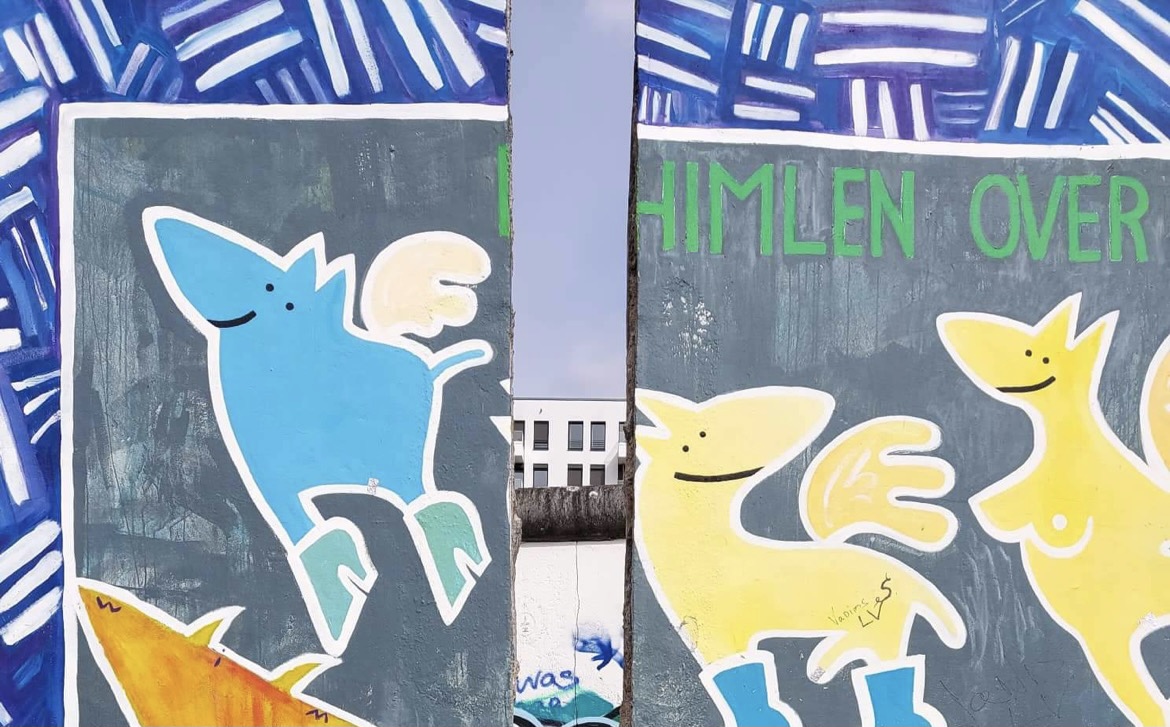
This year, we are celebrating Europe Day in Berlin. The city that breathes and lives re-unification. And future.

Preberi več “Don’t look back. You’re not going that way.”

Mitigating a Covid side-effect: Close-mindedness

by Špela Majcen Marušič

We’ve been reading about all different ways that Covid has impacted our lives in the past year. One aspect that is rarely discussed, however, is that we have started thinking backwards. Keeping people at home or close to home in a pandemic is a reasonable measure, but certain rhetoric about the situation could project us 30 years in the past. Back to when Erasmus exchanges have just begun. So, what can the EU do to keep up the Erasmus spirit in the new normal? Digital communication, digital communication, digital communication.

Preberi več “Mitigating a Covid side-effect: Close-mindedness”

Time to re-introduce creativity in our EU

Just like every other year, since I was about 16 years old, the days leading to Europe Day make me think about the European integration, how we’re doing as Europeans, what I wish for the future, and how this fits with what I see happening around me. I re-read the Shuman declaration this year.

And more than ever, this quote seems appropriate for the occasion of 9 May 2020: “World peace cannot be safeguarded without the making of creative efforts proportionate to the dangers which threaten it.”

Preberi več “Time to re-introduce creativity in our EU”

Cyber ninjas: How much do you know about cyber security?

By Daria Catalui

Are we ninjas in cyber? In my view there is always a need to improve basic behaviour like the services we use to store and transfer safely our data, keep accounts secure with lengthy passwords, verify sources of apps we download, enable two-factor authentication, back up data in order to sleep well…

In this post I intend to present to the reader with some of the EU initiatives that I would recommend to anyone in order to improve the skills in cyber.

ninja-04-desk
Source: seejenwrite.com

Preberi več “Cyber ninjas: How much do you know about cyber security?”

Juncker’s Europe of the future: One President, common army and a stronger market

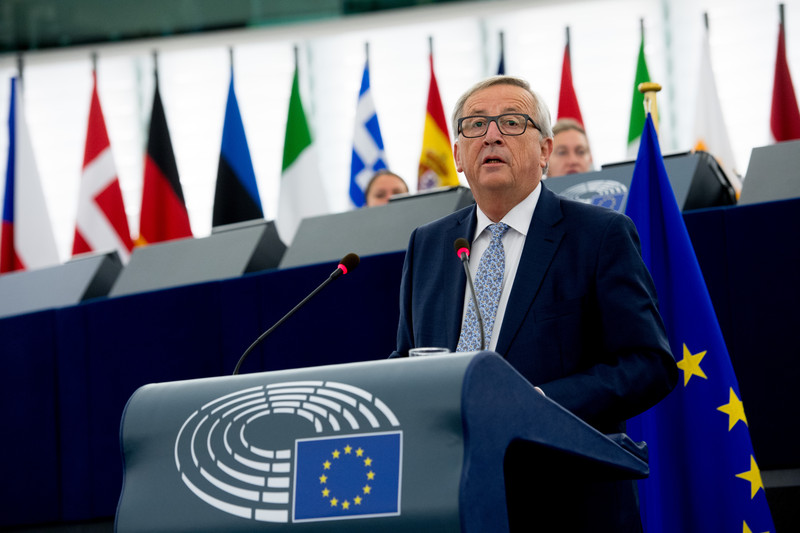
»Those who don’t know how to seek compromise, are not suitable for a democracy and not capable for Europe« is only one of many statements that Jean-Claude Juncker, President of the European Commission, made yesterday morning is his annual address to the European Parliament, the State of the European Union, where he presented his vision for Europe.

This year, things were different. Juncker decided to dedicate the biggest part of his speech to his vision of the future of the European Union. As a true European, Juncker followed the ideas of Europe’s founding fathers and set out a number of ambitious, yet practical and realistic goals for a closer cooperation among the European Union Member States. He spoke of common values (freedom, equality and rule of law), which he transformed into concrete examples. His discourse contained a strong European note of a project that is never finished and that we can build upon, change and adapt any time we are wish. A sole President for the Union, a Minister for economy and finance, pan-European lists for European Parliament elections, a common army and a mechanism for exchange of data among secret services are only some of key elements related to Juncker’s vision for Europe in 2025.

State of the Union Address 2017 by Jean-Claude Juncker, President of the EC
Speech by Jean-Claude Juncker. Source: Eupbserver

Preberi več “Juncker’s Europe of the future: One President, common army and a stronger market”

After Ljubljana and Bled: A blurred role of Slovenia in the European Union of the future

The White Paper on the Future of the Union prompted many new formats that the European institutions as well as national politicians have been testing in the past years, to bring the discussion on the future of the European Union closer its citizens. In this view, Commissioners like Violeta Bulc, have been undertaking a number of Citizens Dialogues, the French President Emmanuel Macron announced a similar setting and we are eagerly awaiting the annual State of the European Union address by the European Commission President, Jean-Claude Juncker, who will this week present his own vision for Europe.

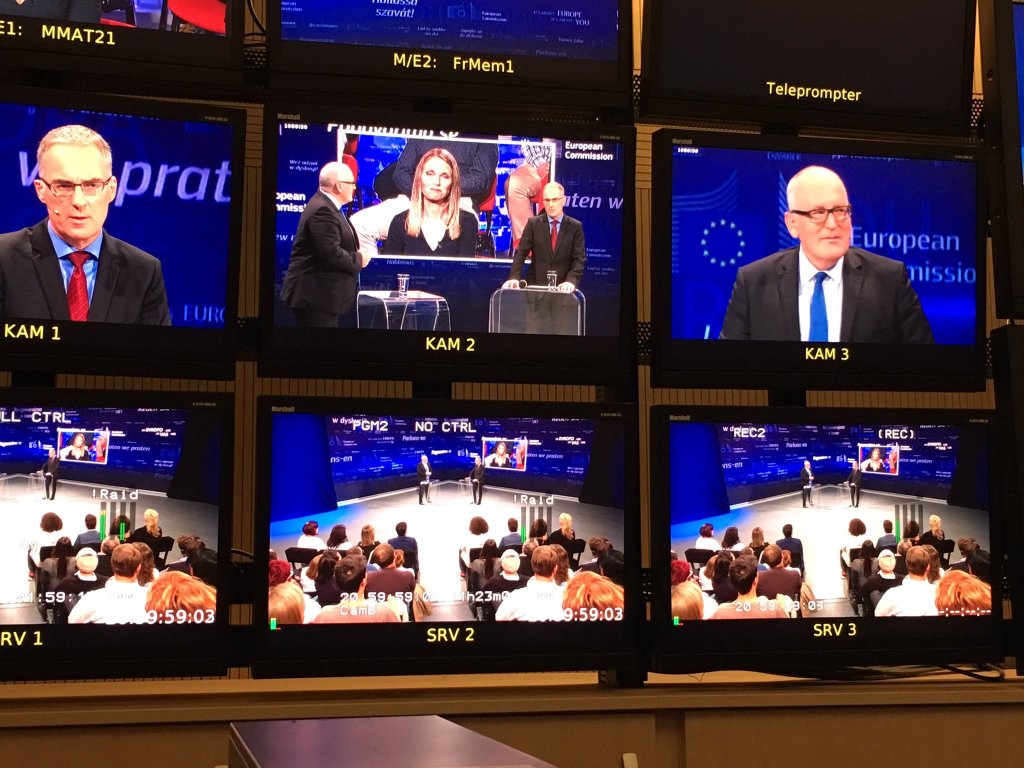
Last week, Slovenia hosted the first Vice-President of the European Commission, Frans Timmermans, who held a dialogue with citizens at the national television. The debate was broadcast live during prime time on TV, as well as radio and social media of the European Commission’s representation in Slovenia. A day later, discussions about the European Union took place in the frame of the Bled Strategic Forum. However, when there is talk in Slovenia about the future of the European Union, more often than not, we face a very limited debate with short-term visions presented by citizens as well as those who represent our country in Brussels and take decisions on its behalf. Long-term scenarios are being debated in Brussels, while Slovenia is thinking about more cohesion funds and how to deal with our neighbours in the next few years. This was again demonstrated last week in the studio of the Slovenian national broadcaster, as well as in the big hall in Bled.

evropska komisija
Source: European Commission

Preberi več “After Ljubljana and Bled: A blurred role of Slovenia in the European Union of the future”

The Ljubljana Initiative – Instant texts from past Treaties

What is The Ljubljana Initiative? What is written in this 70 pages document, produced by some prominent Slovenian politicians and political analysts, which should pompously mark the new era in European integration and give an incentive to Slovenes and Europeans to become more European?

The Ljubljana Initiative might have given Slovenes a sense of belonging to the European family and a sense of shared responsibility for the European project. However, this part of the President of the Republic’s political campaign is (unfortunately) very far from a potential new Treaty on the Constitution for the European Union.

Everything was done by the book. A presentation was made, press releases published, statements delivered and a number of articles were published in many Slovenian media outlets. The Ljubljana Initiative is described as many things: a part of a political campaign, a document that would become a new Constitution for Europe, something that materialized during a walk of a small number of Slovene intellectuals, an initiative supported by the President of the Republic himself. In the midst of numerous political analyses of the Ljubljana Initiative, all of which mainly looked at its impact on internal policies of Slovenia, EU360 prepared our own opinion from the viewpoint of Europe.

65371288_photo_514751_20170106_4
Source: rtvslo.si

Preberi več “The Ljubljana Initiative – Instant texts from past Treaties”

Feelings

It was difficult to write this post. In the last few days I am under influence of different and contradictory feelings. Anger, fear, impotence, gratitude, concern, hatred, intolerance. All of them are present. Anger due to the fact that such an event occurred and that the authorities haven’t prevent it. Fear, that such an event will happen again. Impotence, as I know that I can’t do anything to prevent such things. Gratitude, that I am currently not in Brussels and I am safe and gratitude towards those who thought about me and called or sent me a message to see if I am all right. Hatred towards those who did this. And finally I am also intolerant towards those who permit such facts.

Vir: FB Aurore Schreiber
Source: FB Aurore Schreiber

Preberi več “Feelings”